Opening Nothing: The Deeply Unwell Philosophy of Watching Boxes Get Opened on the Internet
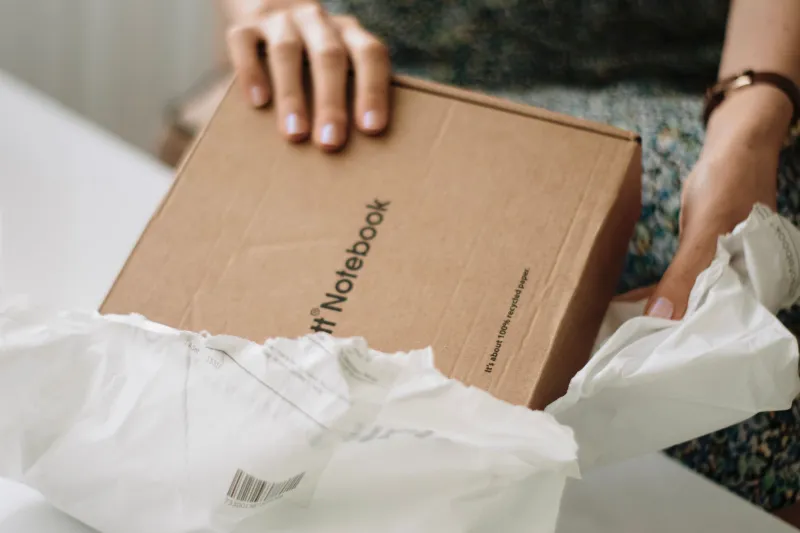
Let's establish something uncomfortable right up front: you have watched a stranger open a box. Not because you needed information. Not because you were making a purchasing decision. You watched it because the moment before the thing was revealed felt like oxygen, and you needed to breathe.
Welcome to the unboxing rabbit hole, population: everyone, and also your aunt who doesn't know what a subreddit is but has watched forty-seven Stanley Cup unboxings on Facebook.
The Anticipation Industrial Complex
Here's what nobody tells you about unboxing content: it was never really about the object. The object is almost aggressively beside the point. What we're actually consuming — what we're genuinely addicted to, with the hollow-eyed devotion of a man who has eaten nothing but gas station sushi for a week — is the moment between. The pause. The peel. The inhale before the reveal.
Dr. Priya Mehta, a cognitive neuroscientist at the University of Michigan who has spent an uncomfortable amount of her professional life studying reward anticipation, describes it with clinical precision that somehow makes it worse: "The dopaminergic response to anticipated reward is actually stronger than the response to receiving the reward itself. Your brain is, in a very literal sense, more excited about the box than what's in it."
So we're not watching unboxing videos because we love stuff. We're watching unboxing videos because our brains are fundamentally broken little anticipation machines that learned to hack themselves using cardboard and a stranger's hands.
Great. Wonderful. No notes.
A Taxonomy of Existential Disappointment
But here's where it gets genuinely philosophical — and also kind of devastating. What happens when the thing inside the box is bad? Not just bad. Cosmically underwhelming. The kind of bad that makes you question the entire architecture of hope itself.
We have compiled, with great personal sacrifice, a ranking of the most existentially devastating unboxing disappointments the internet has ever witnessed:
1. The Mystery Box Sock Reveal (2019, Various) Multiple influencers. Hundreds of dollars. Boxes promising "luxury items" and "curated experiences." The contents: socks. Not even interesting socks. Athletic ankle socks from a brand that no longer exists. The comments section became a grief support group within forty minutes.
2. The Limited Edition Console That Was Just a Box A collector paid $400 for what was described as a "limited edition gaming bundle" from a third-party reseller. The "bundle" was a console box — empty — and a handwritten note that said "enjoy." He did not enjoy. The video has 3.2 million views. We are all complicit.
3. The Advent Calendar Incident A beauty influencer opened a $200 advent calendar live on stream. Day one: a sample-sized moisturizer from 2017. Day two: a hair tie. Day six: a sticker. By day twelve, the chat had collectively decided that the calendar was a metaphor for modern capitalism and began posting Sartre quotes. By day twenty-four, she was crying. The chat was crying. Nobody knew why anymore.
4. The Blind Box Betrayal Collectible blind box figures have spawned an entire sub-genre of unboxing content built entirely on the premise that you might get the rare one. You won't. Nobody gets the rare one. The rare one is a myth designed to keep you buying blind boxes until you die. Fifty-seven consecutive common figures. One man. A single tear. Twelve million views.
The Philosophers Didn't Ask For This But Here We Are
If you describe unboxing culture to someone without internet access — say, a philosophy professor who has been on sabbatical in rural Vermont for the past decade — they will initially assume you're describing some kind of ritual. And they would not be entirely wrong.
There's a genuine argument to be made that unboxing content has become a secular ceremony around the concept of potential. The closed box is pure possibility. It hasn't failed you yet. It hasn't been the wrong color or the duplicate or the slightly-off-center print. Inside the closed box, everything you wanted it to be is still technically true.
The moment of opening is the moment potential collapses into reality. Which is, if you squint hard enough, basically the Copenhagen interpretation of quantum mechanics applied to a Funko Pop.
Dr. James Okafor, a philosopher of technology at NYU who definitely did not expect his career to include the sentence "unboxing content represents a ritualized confrontation with the limitations of material desire," told us — somewhat reluctantly — that "there's something genuinely interesting happening here about how consumer culture has found a way to commodify the space between wanting and having. We've turned anticipation itself into a product."
We've turned anticipation into a product. Let that marinate while you watch your fourteenth blind bag video of the evening.
Why Your Brain Is the Real Unboxing
Here's the part where we get truly unwell with it, so strap in.
Some researchers — and we want to be clear that these are real people with real credentials who presumably did not expect their work to end up on a website called TastySpleen TV — have started suggesting that our fixation on unboxing content mirrors something much older and much weirder in human psychology. The concept of apophenia, the tendency to find meaningful patterns in random or meaningless data, might explain why we can watch the same basic video format hundreds of times without getting bored.
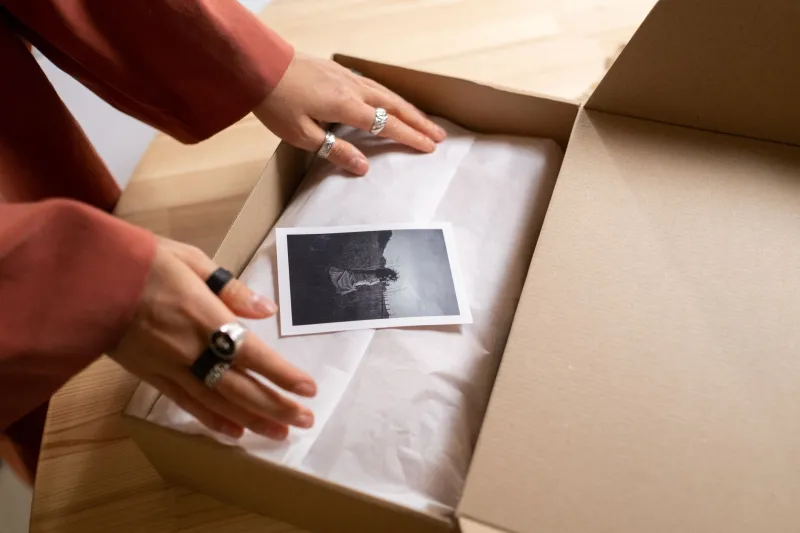
Every unboxing is technically the same video. Box. Hands. Tape. Reveal. And yet each one feels like it might be different. Each one feels like this time, the thing inside will be the thing that finally fills the specific void-shaped hole in your chest that you've been trying to describe to your therapist for three years.
It won't be. It's a vinyl figure of a cartoon character from a franchise you barely remember. But the possibility that it could be otherwise — that's the drug. That's the whole show.
The Box Is Us
We've been staring into the unboxing void long enough that the void has started staring back, and honestly? It looks kind of like bubble wrap.
The real thing the unboxing genre has accidentally documented — over billions of views, across thousands of channels, through an archive of cardboard and expectation that would fill several large warehouses — is the fundamental human inability to be satisfied by arrival. We are creatures of the journey. Specifically, the three-inch journey from sealed box to open box, experienced vicariously through someone else's hands while we sit in our own homes surrounded by our own stuff that we also weren't satisfied by when it arrived.
The unboxing video is a mirror. A slightly overlit, monetized mirror with a ring light and a sponsored segment for a VPN service, but a mirror nonetheless.
And somewhere, right now, someone is opening a box. The chat is going insane. The dopamine is flowing. The contents will be fine. They will always be fine. And it will never, ever be enough.
We'll see you in the comments.