Keyboard Funeral: The Completely Deranged Economics of Streamers Who Destroy Expensive Stuff for Your Entertainment
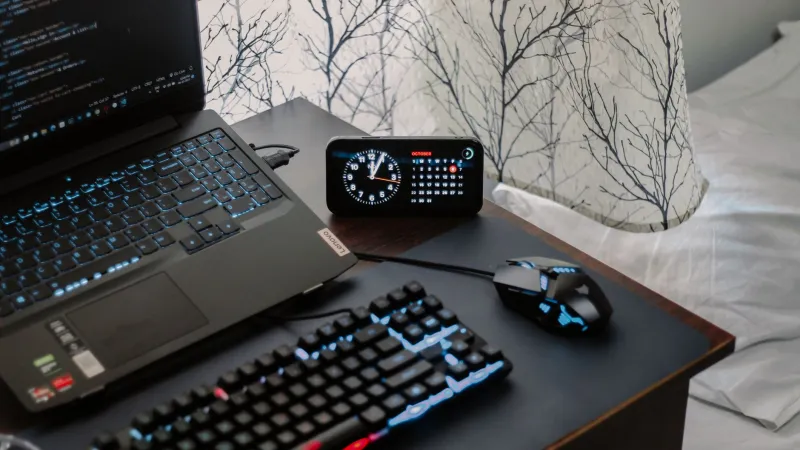
Let's set the scene. A guy in a gaming chair has just died for the forty-seventh time to the same boss in the same dungeon. The chat is a scrolling wall of skull emojis and the word "KEKW" repeated until it stops meaning anything. The streamer's left eye begins to twitch. His hand grips the keyboard. And then — in one glorious, unhinged, deeply unnecessary motion — he lifts a $180 mechanical keyboard over his head and brings it down onto his desk like he's trying to crack open the earth's crust.
The chat explodes. Donations pour in. Someone subscribes at the top tier. Somewhere, a keyboard manufacturer is indirectly profiting from this man's psychological collapse.
Welcome to destruction content. Population: several millionaires who've made a career out of pretending — or genuinely failing — to keep it together.
The Equipment Graveyard Nobody Talks About
Here's a number that should make your brain itch: some of the internet's most prolific rage-quitters have, by conservative fan estimates, destroyed upward of $50,000 worth of equipment over the lifespan of their channels. Controllers. Keyboards. Headsets. Monitors. One streamer famously punched a hole through a $400 monitor during a particularly rough round of a battle royale game and then — this is the important part — immediately ordered a replacement on stream while the chat cheered him on like he'd just scored a game-winning touchdown.
Normal people destroy things in private and feel shame. These people destroy things in public and feel revenue.
The economics here are genuinely surreal. A single viral clip of a properly executed meltdown can generate enough ad revenue, donation spikes, and new subscriber momentum to pay for the destroyed item three times over before the debris even hits the floor. The keyboard isn't a loss. The keyboard is a marketing budget.
Why Your Brain Finds This Deeply Satisfying
Psychologists have a word for the satisfaction of watching someone else lose their mind over a video game: it's called "schadenfreude," and Americans have been practicing it professionally since at least the invention of America's Funniest Home Videos. Watching a dad get hit in the groin by a wiffle ball bat felt funny in 1992. Watching a grown man scream at a loading screen and then punt a $70 controller into a wall feels funny in 2024. The delivery mechanism changed. The ancient human instinct to laugh at someone else's disproportionate suffering did not.
But destruction content adds a layer that AFV never had: the audience participates in the escalation. Chat doesn't just watch the meltdown — chat causes the meltdown. Viewers donate to make the streamer play harder levels. They vote to turn up the game's difficulty. They send messages specifically designed to rattle the person on screen. The destruction isn't just entertainment. It's a collaborative art project where the canvas is a guy's blood pressure and the final painting is a shattered peripheral.
This is either beautiful or deeply concerning, and honestly it might be both.
The Spectrum of Destruction: Real vs. Performance
Here's where it gets philosophically complicated, and by philosophically complicated I mean here's where it gets absolutely unhinged.
Not all destruction is created equal. The content ecosystem has quietly evolved into a spectrum ranging from genuinely uncontrolled rage (rare, raw, and slightly scary) to highly choreographed theatrical meltdowns (frequent, polished, and almost artistically staged). Veteran viewers can often tell the difference. The timing is too clean. The camera angle too convenient. The replacement equipment suspiciously already on the desk.
And yet — viewers watch both. They celebrate both. The authenticity question barely registers, because the function of the content isn't really documentation of genuine psychological distress. It's ritual. It's a recurring ceremony where the streamer plays the role of the person who feels every frustration you've ever swallowed at work, in traffic, in a group chat you can't leave, and then acts on it in the most extravagant way possible.
You can't throw your work laptop through a conference room window. This guy just threw his gaming PC through a metaphorical conference room window and got tipped $400 for it. The transaction makes a horrible kind of sense.
Building a Brand on Broken Glass
Some streamers have leaned into destruction so completely that it's become their entire identity architecture. The rage isn't a side effect of their content — it IS the content. Their entire channel persona is constructed around the expectation of eventual, spectacular failure, and the audience tunes in specifically to witness the moment it happens.
This creates a weird incentive loop. The streamer needs to keep topping themselves. One broken controller is table stakes. Two monitors in one session is a highlight reel. An entire desk flipped with a full setup on it becomes a legendary clip that circulates for years. The escalation ladder only goes one direction, and the rungs are made of expensive electronics.
Brands have even started sponsoring this ecosystem, which is the most American sentence in recorded history. Companies send streamers free equipment specifically because there's a non-zero chance it ends up destroyed on camera in front of hundreds of thousands of people. That's not a sponsorship. That's a product placement strategy that would make a 1950s advertising executive's head spin clean off his neck.
The Part Where We Pretend to Ask Serious Questions
Is any of this healthy? Probably not in the conventional sense. Is it sustainable? Apparently yes, which is somehow more disturbing. Does it say something meaningful about modern stress, parasocial entertainment, and the ways audiences process collective frustration through proxy performance? Almost certainly, and a graduate student somewhere is currently writing a thesis about it that nobody will read.
What it definitely is, without question, is one of the most purely TastySpleen TV things to ever exist on the internet: expensive, unnecessary, weirdly watchable, and completely impossible to explain to anyone over fifty without watching their face cycle through five stages of grief in real time.
The keyboard was going to die eventually. At least this way, it meant something.
At least this way, someone subscribed.