Tape, Tissue Paper, and Transcendence: The Absolutely Feral Economy of Watching Strangers Unwrap Stuff
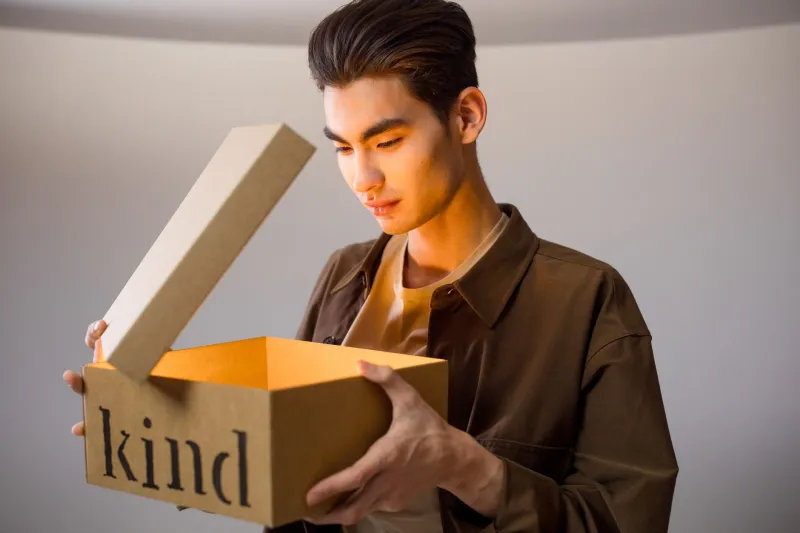
Let's set the scene. It's a Tuesday. You have a mortgage, or student loans, or at minimum a cavity you've been ignoring since 2021. You are a functioning adult human being with agency, opinions, and presumably a to-do list. And yet — and yet — you have spent the last forty-five minutes watching a man in a ring light studio slowly remove a Nike sneaker from a box while making sounds like he's witnessing the birth of his firstborn child.
Welcome to unboxing culture. Population: everyone. Admission price: your dignity and approximately three hours of your afternoon.
The Origin Story Nobody Asked For But Here It Is
Unboxing videos, as a genre, trace back to around 2006 when a guy on YouTube filmed himself opening a Nokia phone. That's it. That's the founding myth. One man, one phone, one camera propped at a questionable angle — and the entire trajectory of digital entertainment shifted forever.
What followed was not a gradual evolution. It was a detonation. By the mid-2010s, unboxing had metastasized into every conceivable product category: tech gadgets, toys, cosmetics, sneakers, Funko Pops, mystery boxes, subscription services, fast food limited editions, luxury handbags, and — this is real — expensive rocks. People film themselves opening rocks they bought online and the videos get millions of views. The rocks just sit there. Being rocks. The internet loves it.
By 2019, unboxing content was pulling in an estimated $650 million in ad revenue annually. That number has not gone down. It has, in fact, gone way up.
Your Brain Is a Raccoon and Packaging Is Shiny Garbage
Here's the thing neuroscience has to say about this, delivered without the jargon: your brain is fundamentally a curiosity-seeking missile that was designed on a budget. The moment you perceive that something is hidden — inside a box, beneath tissue paper, wrapped in a velvet pouch — your dopamine system lights up like a gas station at midnight. You need to know what's in there. You physically cannot help it.
Psychologists call this the "information gap theory" of curiosity, which is a fancy way of saying your brain hates not knowing things and will watch a YouTube video for twenty minutes just to fill that gap. Unboxing creators have essentially hacked this mechanism and built entire careers out of exploiting it, one layer of crinkle paper at a time.
The reveal is the payoff. The slow build is the foreplay. And the creators who are really good at this — the ones raking in seven figures — understand pacing the way a thriller novelist understands tension. They linger. They comment on the box's exterior. They hold the item up to the light. They make you wait. It's theatrical. It's manipulative. It's genuinely brilliant.
The Subscription Box Singularity
If regular unboxing is a campfire, subscription box unboxing is a wildfire that jumped three counties. Companies like FabFitFun, Loot Crate, Ipsy, and approximately nine hundred competitors figured out that they could sell mystery as a product, and then people would also film themselves receiving that mystery product, creating free advertising that would make a traditional marketing exec weep into their quarterly reports.
The genius — and the absolute psychosis — of this ecosystem is that everyone wins except possibly your wallet. The brand gets exposure. The creator gets content. The viewer gets their dopamine hit. And somewhere in a warehouse in Ohio, a fulfillment employee is packing the four hundredth box of the day with a scented candle and a branded tote bag, wondering how any of this is real.
Mystery boxes took it further. You don't even know the category of what you're getting. You're paying $50 to watch someone pay $50 to open something that might be a gaming controller or might be a decorative plate shaped like a moon. The suspense is structural. The chaos is the product.
The Luxury Lane: When Unboxing Becomes Performance Art
At the premium end of the spectrum, unboxing transforms into something that feels genuinely close to theater. High-end sneaker unboxings — your Jordans, your Yeezys, your limited-release collabs that required a lottery entry to purchase — are treated with the gravity of archaeological discoveries. Creators wear gloves. Actual gloves. To touch shoes.
Luxury handbag unboxings operate on a similar frequency. A Birkin reveal video will have soft piano music, overhead lighting calibrated to make leather look like it was kissed by angels, and a narration style borrowed from nature documentaries. "And here — here we see the dust bag. The dust bag, of course, is a symbol of what's to come."
Nobody is making fun of these creators, by the way. They're absolutely correct to treat it seriously. The market demands reverence. The viewers want to feel like they're witnessing something sacred, even if — especially if — they could never afford the item themselves. The vicarious luxury experience is its own entire psychological phenomenon, which deserves its own article and possibly its own support group.
The Completely Normal People Filming Their Own Mail
And then there's the subgenre that represents unboxing culture's purest, most chaotic form: regular people filming themselves opening their own regular mail. Not PR packages. Not mystery boxes. Just. Their mail.
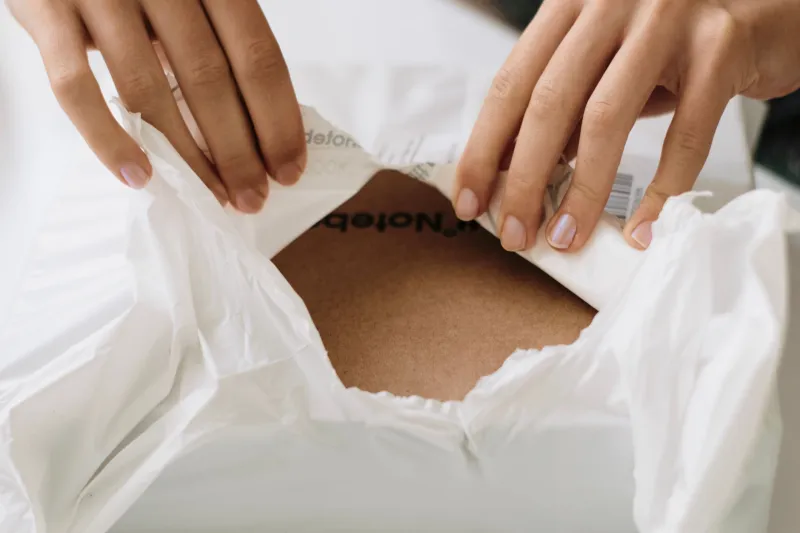
Haul videos — where someone films everything they bought on a recent shopping trip and then shows you all of it — are the spiritual ancestor here. But mail-opening content strips away even the retail context. It's just a person, a camera, and whatever UPS dropped off. Amazon orders. Etsy purchases. A birthday gift from a relative. Viewers watch in the hundreds of thousands.
This is, objectively, the most honest form of unboxing content. There's no brand deal. There's no theatrical packaging. There's just the primal human experience of receiving something and opening it, which apparently doesn't require any additional context to be deeply compelling television.
The Part Where We Reckon With All of This
Unboxing culture is not going away. It has, if anything, embedded itself more deeply into the entertainment landscape than anyone predicted when that Nokia video went live in 2006. It has spawned industries, launched creator careers, and fundamentally altered how companies think about packaging as a marketing tool.
The boxes are designed to be filmed now. The tissue paper is branded. The inserts are Instagram-worthy. The entire supply chain has reorganized itself around the assumption that someone, somewhere, will record the opening and post it online.
Is it weird? Profoundly. Is it a sign of something deeply strange about how humans find meaning and satisfaction in an overstimulated digital age? Almost certainly. Is it going to stop you from clicking on the next video of someone opening a mystery sneaker box at midnight?
Absolutely not. Your dopamine system already has the tab open.