Cardboard Crack: The Deranged Psychology Behind Watching Strangers Tear Open Boxes for Fun

Let's set the scene. It's 11:43 PM on a Tuesday. You are a functioning adult with responsibilities, relationships, and at least one unread bill on the kitchen counter. And yet here you are, watching a man in Scottsdale named DaveUnboxDaily narrate the structural integrity of a shipping label while 340,000 people observe in real time. You haven't bought anything. You don't plan to buy anything. You are simply... watching someone else open a box. And it feels incredible.
Welcome to the unboxing industrial complex, where the act of receiving a package has been elevated to performance art, competitive sport, and — for the most dedicated corners of YouTube — a kind of secular communion.
The First Cut Is the Deepest (Literally)
Unboxing videos didn't invent themselves out of nowhere. The genre has murky origins somewhere around 2006, when early YouTube adopters discovered that filming themselves opening tech gadgets got views. Not because the gadgets were special. Because the opening was special.
There's actual neuroscience lurking beneath this ridiculousness. Humans are wired to respond to the sounds and visuals of discovery — the rustle of tissue paper, the satisfying resistance of a well-taped cardboard flap, the moment of reveal when whatever's inside finally emerges from its packaging cocoon. Your brain processes this as a genuine event. A thing is happening. Dopamine gets involved. You didn't buy anything, you didn't do anything, and yet some lizard part of your skull is absolutely convinced you just scored.
The packaging industry, by the way, knows this. Apple built an entire cult around the sound their boxes make when you slide the lid off. Companies now hire "unboxing experience designers." This is a real job. People are employed specifically to engineer the moment a stranger on the internet peels your product open, because that stranger's reaction is now marketing.
The Hand Economy
Here's where it gets genuinely strange: most unboxing creators never show their faces. You are in a committed viewing relationship with a pair of hands. Maybe some forearms. The parasocial bond is being formed with someone's knuckles.
And yet parasocial it absolutely is. Viewers develop strong preferences. They have favorite unboxers whose hands they could probably identify in a lineup. They leave comments like "your nail polish this week is everything" or "love how you always do the sniff test first" — intimate observations about the rituals and quirks of someone whose face they have never seen and whose name they may not even know.
The hand economy has its own stars. There are unboxers who specialize exclusively in Funko Pops, luxury fashion hauls, mystery subscription boxes, vintage toys, Japanese candy imports, and — in one particularly committed corner of the internet — exclusively unboxing other people's unboxing merchandise. It's recursive. It's unhinged. It has millions of subscribers.
The ASMR Mutation
Somewhere along the evolutionary timeline, unboxing and ASMR fused into a single organism, and that organism is now one of the most-watched content categories on the entire platform. ASMR unboxing videos aren't just about the product. They're about every sound the product makes on the way to being revealed.
The tape being slowly, deliberately separated from the cardboard. The crinkle of the inner plastic sleeve. The soft thud of a product being placed on a felt surface. Creators in this genre treat Amazon packaging like it's a Michelin-starred meal being plated at a restaurant where the chef also whispers.
Viewers watch these at night, with headphones in, specifically to fall asleep. The act of consumer acquisition has been repurposed as a sleep aid. Jeff Bezos is, in some technical sense, helping Americans with their insomnia. This is not a sentence anyone predicted needing to write.
The Existential Reckoning (It Comes for Everyone)
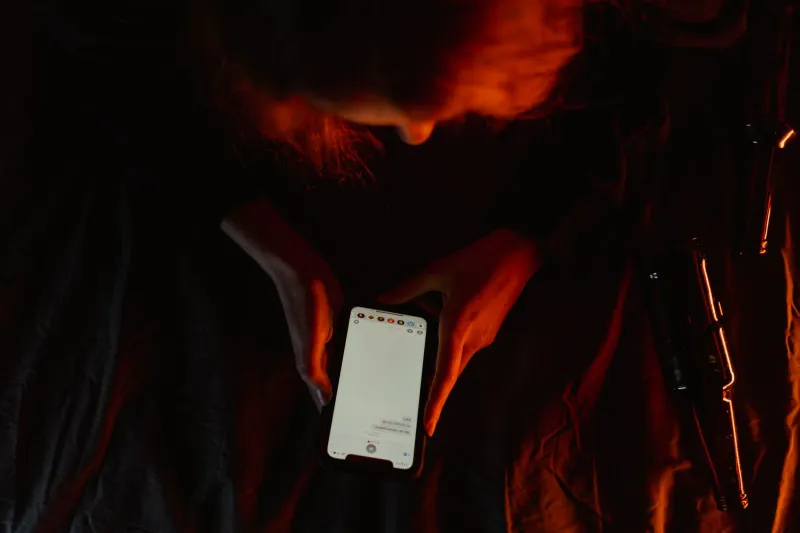
At some point in your unboxing video journey, the reckoning arrives. You'll be seventeen minutes into a video — somebody unboxing a mid-range KitchenAid attachment they ordered from a Facebook ad — and you'll suddenly become aware of yourself. Aware that you are lying horizontal, phone six inches from your face, watching someone else experience the mild pleasure of receiving mail.
The questions arrive fast and they are not comfortable. Why am I watching this? What am I getting from this? Is this what leisure looks like now? Is this better or worse than watching TV? At least TV had plot. This has packing peanuts.
And then — and this is the truly unhinged part — you keep watching. Because the box isn't fully open yet. Because you need to see what's inside. Because your brain has committed to this journey and it wants the payoff even though the payoff is watching someone else receive a payoff that was never yours to begin with.
Consumer psychologists have a term for this: "vicarious consumption." You experience the pleasure of acquiring something without the cost, the delivery wait, or the eventual buyer's remorse. It's consumption with training wheels. Or maybe it's consumption on a treadmill — all the motion, none of the destination.
The Creator Side of the Box
Meanwhile, the people doing the opening are operating a full media business. Top unboxing creators negotiate brand deals, receive PR packages from companies desperate for that "authentic reveal" moment, and maintain upload schedules that require them to order, receive, film, and edit multiple packages per week. The spontaneity is largely choreographed. The surprise faces are practiced. The "oh WOW" is a deliverable.
Some creators have gotten so big that they now unbox things live, with chat participation, turning package-opening into a spectator event with real-time audience commentary. Thousands of people watch simultaneously, typing "OPEN IT" as if they are at a sporting event and the box is the ball. The parasocial stakes feel genuinely high. People get emotionally invested in whether the mystery box contains the rare item or the common one. They feel the disappointment personally. They leave condolence comments.
It is, objectively, one of the strangest entertainment formats ever to achieve mainstream scale.
So Why Does It Work
Because anticipation is the best part of getting anything, and unboxing videos let you live in that anticipation indefinitely without ever having to deal with the aftermath. The product never disappoints you because it was never yours. The dopamine hits without the credit card statement.
Because the sounds are genuinely satisfying in a world that is mostly overwhelming.
Because watching someone be delighted by something — even something completely mundane, even someone whose face you've never seen — is, at a very basic human level, kind of nice.
And because at 11:43 PM on a Tuesday, sometimes you just need to watch a stranger in Scottsdale open a box.
Dave's doing another one tomorrow. You'll probably tune in.