Dopamine by Drawer: The Gloriously Unhinged Psychology of Watching Strangers Wrestle Their Clutter Into Submission
Let's set the scene. It's 11:47 PM on a Tuesday. You have a sink full of dishes, a car that hasn't been vacuumed since the Obama administration, and a junk drawer so catastrophically overstuffed that it stopped fully closing sometime around 2019. And yet — and yet — you are lying horizontally on your couch, phone six inches from your face, watching a woman in Scottsdale, Arizona label-gun her way through a pantry reorganization with the focused serenity of a Buddhist monk who also happens to own a Cricut machine.
This is organization content. It is enormous. It is deeply, profoundly weird. And if you're reading this, you've almost certainly already been there.
The Junk Drawer Industrial Complex
The numbers are not small. Hashtags like #organization, #declutter, and #cleanwithme have collectively accumulated billions — with a B — of views across TikTok, YouTube, and Instagram. Marie Kondo sparked the initial wildfire when she told the world to only keep things that "spark joy," which for most Americans translated to keeping everything and just feeling slightly guilty about it. But the content machine that followed? That thing took on a life of its own.
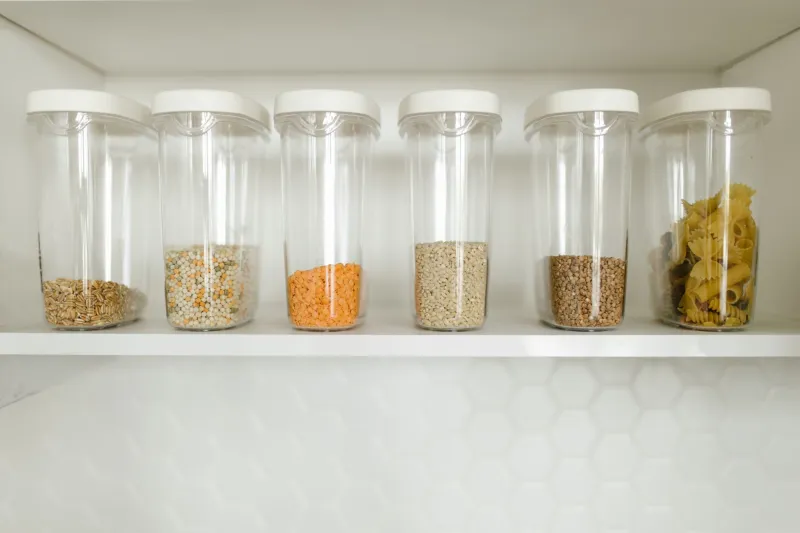
Now there are full channels dedicated exclusively to the before-and-after of junk drawers. There are ASMR-adjacent videos where the entire appeal is the sound of someone clicking plastic bins together inside a refrigerator. There are creators who have built genuine six-figure followings by doing nothing more than decanting dry pasta into matching glass containers while lo-fi music plays softly in the background. The pasta doesn't taste different. The creator knows this. The viewer knows this. Nobody cares.
Your Brain Is Absolutely Scamming You
Here's where it gets interesting, and by interesting we mean mildly horrifying. Psychologists have a term for what's happening when you watch someone else clean their garage for ninety minutes: vicarious completion. Your brain, that magnificent grifter living rent-free in your skull, doesn't fully distinguish between watching a task get done and actually doing it. You get a diluted but real hit of satisfaction. The checkbox gets a faint, phantom tick.
This is your nervous system essentially committing fraud against you, and you are a willing victim.
The organizational content genre has weaponized this glitch with surgical precision. The videos are structured like tiny emotional journeys — chaos at the beginning, visible struggle in the middle, transcendent labeled-bin order at the end. It's a three-act structure. It's a hero's journey. The hero just happens to be a woman named Brittany who found seventeen dead pens and a 2014 Applebee's coupon inside her desk drawer, and she handled it with more grace than most people handle actual crises.
The Specific Agony of Watching Someone Else's Mess
There's a secondary psychological layer here that deserves its own uncomfortable examination. Part of the appeal — and creators who've built big audiences will tell you this openly — is the before. The mess. The catastrophic, sprawling, validating disaster of someone else's home in its natural state.
Because when you see that closet before the transformation, the one with the avalanche-ready stack of board games and the mystery cables and the single roller blade (just one, always just one), something in your chest loosens. Oh thank God, says your brain. Other people live like this too. The mess is communion. The mess is confession. And then the cleanup that follows isn't just satisfying — it's aspirational without being threatening, because it's happening to someone else's stuff in someone else's zip code.
You get the catharsis without the confrontation. It's therapy, except the therapist is a Ring light and a subscription to The Container Store's affiliate program.
The Aesthetics of Productive Paralysis
Let's be direct about something. The organization content genre has perfected the art of making inaction feel like action. This is, objectively, a remarkable achievement. Watching four hours of decluttering videos is not the same as decluttering. Everyone knows this. And yet the genre has cultivated an entire ecosystem of viewers who describe these videos using words like motivating and inspiring — and then close the app, roll over, and go to sleep surrounded by the same pile of stuff they've been meaning to deal with since the pandemic.
The creators are not villains here. Many of them genuinely believe in what they're doing and have built real communities around the shared human anxiety of feeling buried alive by possessions. But the platform mechanics — autoplay, the algorithm's relentless gift of one more video — have turned "I'll watch one organizing video to get motivated" into a three-hour tour through fourteen different people's pantries. You emerge blinking into the dark, feeling vaguely accomplished and completely stationary.
The Bin Cinematic Universe
What makes this genre particularly unhinged, and we mean that as the highest possible compliment, is the product ecosystem it has spawned. Specific storage bins have become famous. Not the companies. Specific. Individual. Bins. There are Reddit threads debating the structural integrity of particular acrylic drawer organizers with the passion of people who have strong feelings about load-bearing walls. Amazon's "Frequently bought together" algorithm has become a fever dream of matching containers, label makers, and turntables — those lazy Susan things that people put in cabinets so they can spin their canned goods instead of, I don't know, just reaching.
The aesthetic has a name: "The Organized Home." It features a very specific color palette — white, beige, the occasional tasteful sage green — and a font on every label that is always, always, some variation of a thin sans-serif. If you've ever seen a pantry where someone has decanted their Cheerios into a clear canister and written "CHEERIOS" on it in that font, you have entered the Bin Cinematic Universe. There is no leaving. There is only more content.
So Why Can't You Stop
Because the world is loud and overwhelming and your actual junk drawer is a physical manifestation of every life admin task you've been avoiding since 2021, and watching someone else conquer their version of it — methodically, cheerfully, with a label maker and good lighting — offers something genuinely rare: the feeling that chaos can be defeated. That there is an order underneath the mess. That things can, eventually, make sense and fit neatly into their designated spaces.
It's not really about the bins. It never was.
It's about the fantasy that somewhere, somehow, everything is going to get sorted out. And until it does, there are approximately forty thousand more pantry transformation videos waiting for you. The algorithm has already queued them up. Your junk drawer will still be there tomorrow.
The expired batteries aren't going anywhere.