The Church of Chewing: How Watching Strangers Inhale Entire Buffets Became America's Weirdest Coping Mechanism
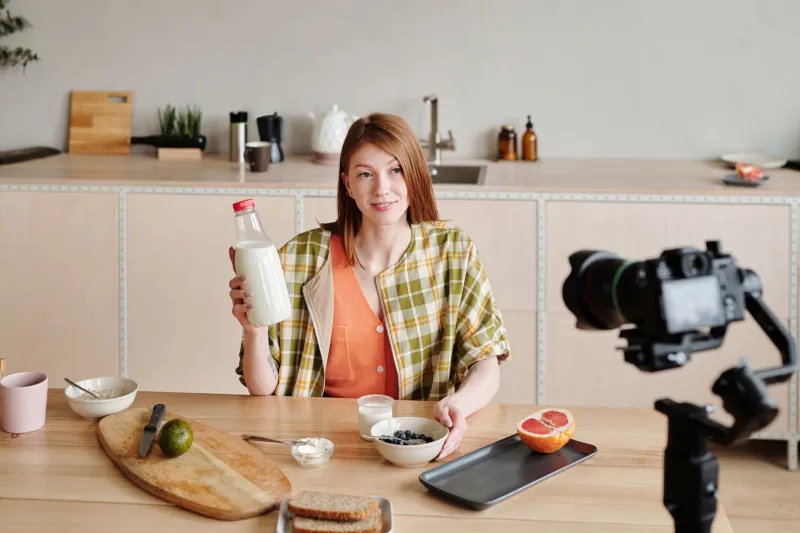
Let's just say it out loud: you have, at some point, watched a stranger on the internet eat an obscene quantity of food and felt something dangerously close to peace. Maybe it was a woman in Seoul working through seventeen courses of Korean barbecue while barely breaking eye contact with the camera. Maybe it was a guy in a suburban kitchen in Ohio consuming an entire Thanksgiving spread — solo — on a random Tuesday. Maybe you don't want to talk about it. That's fine. We're not here to judge. We're here to figure out how this became a billion-dollar industry, and why your brain has apparently decided that watching someone else eat is the closest thing to meditation that 2024 has to offer.
Welcome to mukbang. Population: absolutely everyone, apparently.
What Even Is This and Why Does It Exist
The word "mukbang" comes from Korean — a mashup of "meokda" (eating) and "bangsong" (broadcast). It launched as a genre on South Korean streaming platforms around 2010, originally filling a genuinely practical gap: people eating alone who wanted the social simulation of sharing a meal with someone. That's it. That was the whole pitch. Eat food. Camera on. People watch.
And then the American internet got hold of it and, as is tradition, made it bigger, louder, more caloric, and somehow more emotionally complicated.
By the mid-2010s, creators on YouTube were racking up millions of views doing nothing except consuming truly unhinged quantities of food — we're talking full seafood boils, ten pounds of ramen, entire sheet cakes — while narrating their experience with the energy of a nature documentary host who also happens to be having the time of their life. The ASMR crossover happened almost immediately, because of course it did. The sounds of crunching, slurping, and the particular wet thwack of someone biting through a king crab leg turned out to be, neurologically speaking, basically a lullaby for a significant chunk of the population.
The Numbers Are Genuinely Unhinged
Here's where the story stops being weird and starts being insane. Top mukbang creators aren't making "side hustle" money. They're making "buy a house in cash" money. Channels like Bloveslife, Stephanie Soo, and Nikocado Avocado (more on him in a moment) have pulled in millions of subscribers and generated revenue streams that include YouTube ad dollars, brand partnerships with food companies, merchandise, and direct fan support through platforms like Patreon and YouTube memberships — where viewers literally pay a monthly fee to watch someone eat.
The broader ASMR and mukbang economy on YouTube alone is estimated to be worth hundreds of millions of dollars annually. Food brands have figured out that a mukbang creator eating their product on camera — authentically, messily, with genuine enthusiasm — converts better than a standard ad. There's a reason Shin Ramyeon and Buldak noodles have become household names in the US partly through mukbang exposure. This is a marketing pipeline. A very wet, very crunchy marketing pipeline.
Your Brain on Chewing Sounds: A Brief Neurological Detour
So why does it work? Why does watching someone else consume a mountain of seafood feel like taking a long bath?
Psychologists and neuroscientists have been genuinely puzzling over this. The working theories are several. First, there's the social surrogate angle — the same reason people eat alone in front of the TV. The presence of another person eating, even on a screen, triggers something primal about communal dining that the human brain apparently cannot distinguish from the real thing. You feel less alone at the table.
Second, there's the control element. You're watching someone eat without any of the social anxiety, caloric guilt, or financial cost associated with eating yourself. It's vicarious consumption, completely consequence-free. Your brain gets the dopamine hit of a feast without your body having to process a single shrimp.
Third — and this is where it gets a little uncomfortable — there's the spectacle. Part of the appeal is the sheer scale of it. Watching someone eat ten pounds of food is watching someone do something you cannot and probably should not do. It's the same energy as watching someone free solo a cliff face, except the stakes are mostly heartburn.
The Creator Side Is Significantly Less Zen
Here's the part of the story that the ASMR glow-up tends to obscure: being a mukbang creator is, by most accounts, genuinely brutal on the human body.
Nikocado Avocado — one of the most famous and most chaotic figures in the genre — has become a kind of cautionary tale and a performance art project simultaneously. Over roughly eight years on YouTube, his content evolved from wholesome vegan cooking videos into elaborate emotional breakdowns staged around massive food consumption, complete with crying, screaming, and a documented and very public weight gain that became part of the content itself. Whether that's performance, exploitation, or both is a debate that the internet has been having loudly and without resolution for years.
Beyond the outlier cases, there's documented evidence of mukbang creators dealing with disordered eating, gastrointestinal damage, and the psychological toll of performing appetite — being enthusiastic about enormous quantities of food, on camera, multiple times a week — regardless of how they actually feel. The genre rewards extremity. Bigger portions, louder reactions, more dramatic food choices. The algorithm doesn't care that your stomach hurts.
Creator burnout in the mukbang space is real, documented, and almost never discussed in the comments section where people are busy asking for the sauce recipe.
The Line Nobody Wants to Draw
There's a version of this conversation that stays fun and weird and ends with a list of recommended channels. And then there's the version where you sit with the fact that the economics of mukbang are essentially structured around rewarding creators for doing things to their bodies that nutritionists and gastroenterologists would describe as "a problem."
The audience isn't malicious. Most people watching a seafood boil video at 11pm are just unwinding. They're not demanding anyone suffer for their entertainment. But the market has its own logic, and the market's logic here says: more food, more drama, more extremity equals more views equals more revenue. The creator is the product, and the product is their body's capacity to absorb punishment in real time.
That's the uncomfortable center of the whole thing. Not the chewing sounds. Not the calorie counts. The fact that the most soothing content on the internet is built on a foundation that is, for the people making it, often genuinely unsustainable.
Eat, Watch, Repeat
None of this is going to stop mukbang from being a multimillion-dollar industry. If anything, it's going to get bigger. As AI-generated content floods every other corner of the internet, the appeal of something real — a real person, real food, real sounds — is only going to increase. Mukbang is, in a deeply strange way, one of the most authentically human things on the internet right now.
Which is maybe the most TastySpleen thing we've ever typed.
So go ahead. Queue up that crab leg video. Light a candle if you want to commit to the bit. Just maybe — between bites you're watching someone else take — spare a thought for the person behind the camera who has to do this again tomorrow.
And the day after that.
And every day until the algorithm decides to move on.