The Failure Economy: How Being Spectacularly Bad at Games Became a Six-Figure Career
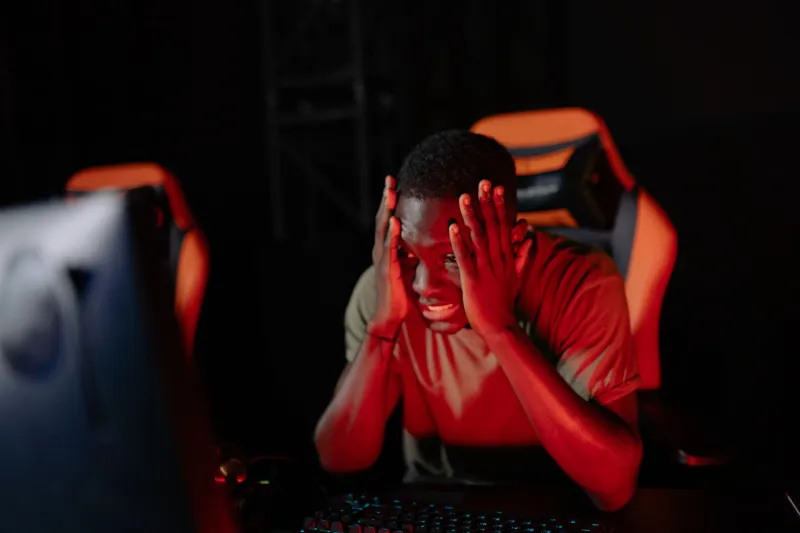
Let's set the scene. A streamer is on hour three of a cooking segment. They were supposed to make pasta. The pasta is on fire. The fire is spreading to a dish towel. The dish towel is now also on fire. Chat is going absolutely feral. Someone just donated $100 with the message "DONT PUT WATER ON A GREASE FIRE" and the streamer is already reaching for a glass of water.
This is not a disaster. This is content. Premium, monetized, audience-retaining content.
Welcome to the Failure Economy — the bizarre, thriving corner of internet entertainment where being spectacularly incompetent isn't a liability. It's the whole business model.
Incompetence as a Product
Here's the thing about skill in streaming: it plateaus. A speedrunner who executes a perfect run is impressive for about ninety seconds before you realize you have no reference point for what "good" looks like. A chef who perfectly julliennes vegetables is relaxing, sure, but it doesn't make you lean forward in your chair.
But a streamer who has been playing the same opening level of a game for four hours while making increasingly unhinged strategic decisions? That keeps you watching. That makes you hit the subscribe button. That makes you open your wallet and type something unhinged in the donation box just to see what happens.
The psychological mechanism here is not complicated, but it is deeply human. We are wired to watch things go wrong. Evolutionary biologists would probably have something to say about threat assessment and pattern recognition. The more practical explanation is that failure is funny, failure is unpredictable, and unpredictability is the single most powerful retention tool any entertainer can have.
A good player finishes a game. A bad player might do literally anything.
The Taxonomy of Professional Incompetence
Not all bad streamers are the same, and the market has developed with impressive specificity. There are distinct archetypes operating in the Failure Economy, each with their own monetization signature.
The Oblivious Optimist is the streamer who genuinely believes they are good. Every failed attempt is met with the same confident energy, the same baffling strategic justification, the same absolute refusal to consider that they might be the problem. This type generates the most unhinged donation messages because chat is essentially paying to scream into the void.
The Self-Aware Disaster knows exactly what they're doing and has leaned all the way into it. They've branded their incompetence. They have emotes for their most famous failures. They have a highlight reel. Their "just one more attempt" has become a running gag with its own lore. This is arguably the most sophisticated version of the business model because it requires genuine comedic timing — you have to fail in entertaining ways, which is actually a skill.
The Chaos Agent doesn't fail at the game so much as they fail at the concept of playing games in any recognizable way. They'll attempt things that were never meant to be attempted. They'll ignore every mechanic the developers intended and try to build an entirely different game inside the existing one, using only vibes and poor judgment. Donations in this category tend to be challenges — "I'll give you $20 to try to complete this entire dungeon backwards" — which is its own whole economy.
Why Chat Pays to Watch People Fail
This is the part that should be weirder than it is: people are genuinely spending real money to watch someone be bad at something. Not just watching for free. Actively funding the failure. Sending five, ten, fifty dollars into a stream specifically because the streamer just did something catastrophically stupid.
The donation isn't really a tip. It's more like a participation fee. When you send money during a spectacular failure moment, you become part of the moment. Your username appears on screen. The streamer reacts. Chat sees your message. You are now a credited contributor to this small, ridiculous piece of internet history.
There's also a power dynamic that's worth naming. In most entertainment, you're a passive observer. The performer is skilled. They are doing something you cannot do. Watching a bad streamer inverts this entirely — you are almost certainly better at the game than the person playing it, which creates a specific kind of engaged superiority that is apparently very monetizable. Chat becomes a collective of extremely invested backseat drivers who are paying for the privilege of being ignored.
The Business Numbers Are Genuinely Insane
The economics here are not theoretical. There are streamers operating in the Failure Economy who are pulling in six figures annually — not from sponsorships or brand deals, but from direct audience support fueled almost entirely by incompetence theater.
The key metric isn't peak viewership. It's session length. Bad streamers keep people watching longer because every moment carries the possibility of something going more wrong than it already has. A viewer who stays for three hours instead of forty-five minutes is worth dramatically more to a platform algorithm, which means the failure content gets surfaced more, which means more viewers, which means more donations, which means the streamer can afford to keep doing this professionally.
Some of the most financially successful "bad at X" streamers have diversified into merchandise that explicitly celebrates specific failures — shirts referencing a particularly iconic disaster run, clip compilations sold as VOD content, even subscription tiers where higher-paying members get to submit challenges designed to make things worse. The failure isn't just the content. The failure is the entire brand architecture.
The Meta-Skill Nobody Talks About
Here's the uncomfortable truth hiding inside the Failure Economy: being entertainingly bad is actually hard. Not every person who is genuinely terrible at games becomes a successful streamer. The streamers who have built real businesses on incompetence have a meta-skill that has nothing to do with the game they're playing.
They know how to make failure feel like an event. They have timing. They know when to commit to a bad decision for comedic effect versus when to course-correct before the audience gets frustrated. They understand the emotional arc of a failure run — the setup, the escalation, the catastrophic conclusion, the immediate attempt to do it again with identical results. That's a performance. It just looks like incompetence.
The streamer reaching for the glass of water while chat screams about grease fires? They heard the donation. They read the message. They made a choice.
The pasta was always going to burn.
That's the bit.
And somewhere, someone is already typing their credit card number to see what happens next.