When the Stream Breaks: A Love Letter to TV's Most Glorious Technical Disasters
There is a very specific kind of joy that comes from watching something expensive and professionally produced just absolutely disintegrate in real time. Not in a mean-spirited way. More like the way you feel watching a Jenga tower collapse in slow motion — you didn't want it to happen, but now that it's happening, you cannot look away and you are smiling way too hard.
Streaming platforms have handed us this gift more times than they'd like to admit. Netflix, YouTube, Twitch — all of them have, at one point or another, transformed from slick entertainment machines into accidental Dada art installations. And honestly? Some of those broken moments hit harder than whatever they were originally trying to broadcast.
Let's dig into the beautiful wreckage.
The Glitch That Ate Someone's Face
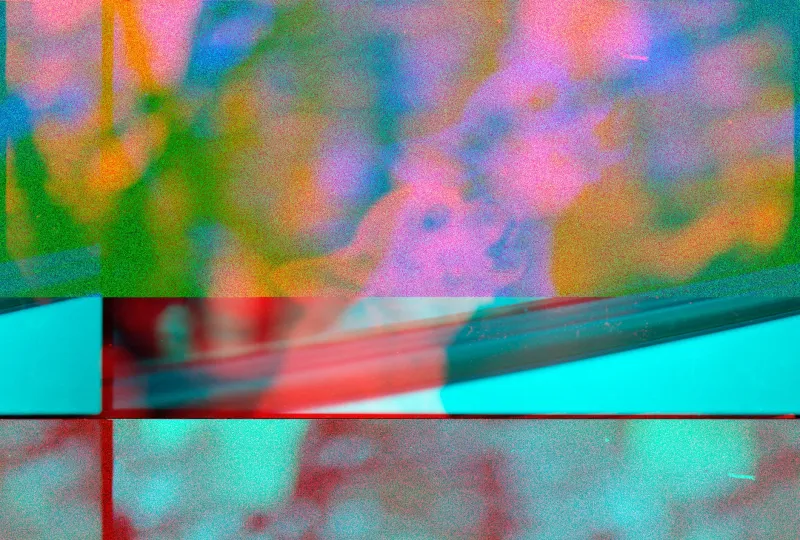
Compression artifacts are the unsung villain of the streaming era. One second you're watching a perfectly normal true crime documentary, and the next, the host's face has turned into a Picasso painting — one eye migrating toward their forehead, their mouth stretched into something that belongs in a Silent Hill expansion pack.
This phenomenon, technically called macroblocking, happens when streaming infrastructure gets overloaded or when a platform tries to push too much data through too narrow a pipe. The result looks like a demon trying to inhabit a human body and failing the tutorial. Netflix has served up some legendary examples during high-traffic premiere nights, where a beloved character's face suddenly resembles a melting bag of shredded cheese.
Clips of these moments have racked up millions of views on social media — often more views than the original episodes they interrupted. There is something deeply, philosophically funny about that. The glitch becomes the content. The error eats the art.
The Audio Incident Nobody Saw Coming
If glitching visuals are chaotic neutral, audio failures are chaotic evil. A dropped video feed is inconvenient. But a microphone that suddenly starts picking up something it absolutely should not? That's a memory you carry for years.
Live streaming on Twitch has produced an entire catalog of unhinged audio disasters. There was the very real and very documented phenomenon of streamers accidentally broadcasting their own background television — which wouldn't be a problem except that DMCA bots would immediately nuke their stream mid-sentence, leaving audiences staring at a silent, confused face before the whole thing cut to black. The streamer would return twenty minutes later looking like they'd aged a decade.
Then there are the ambient noise incidents. Dogs. Roommates. Significant others who did not know the stream was live. One particularly legendary Twitch moment involved a streamer's smoke alarm going off for a full eleven minutes while they calmly tried to continue a sponsored segment. They read three full paragraphs of ad copy while the alarm screamed. The comments were simply the word "BEEP" repeated for eleven minutes straight. It became a template. It became a meme. It became, briefly, a sound effect in someone else's podcast intro.
Unexpected Nudity and the Art of the Pivot
Look, nobody plans for this. That's exactly what makes it so compelling.
The history of live television is littered with moments where something anatomically unscheduled made it onto a screen that was very much not supposed to host it. Streaming didn't fix this problem — it democratized it. Now anyone with a laptop and a Ring light can accidentally broadcast something that would make their grandmother need to sit down.
The truly elite-level disasters are the ones where the broadcaster doesn't immediately realize what's happening. The calm continues. The commentary keeps rolling. The audience's chat explodes into all-caps chaos while the person on screen remains serenely unaware. Those ten to thirty seconds of pure dramatic irony are, cinematically speaking, flawless. No screenwriter could time it better.
Several of these moments have launched the accidental subjects into genuine internet fame. Not always the kind they wanted, but fame nonetheless. There's a dark poetry to that.
Production Breakdowns as Performance Art
Sometimes the disaster isn't a glitch — it's a systemic collapse. The whole production just... stops pretending.
YouTube's auto-generated live captions have a long and storied history of turning coherent sentences into surrealist poetry. A cooking demonstration becomes an accidental manifesto. A news anchor's weather report transforms into something that sounds like a ransom note written by a philosophy major. Screenshots of these captions circulate with the reverence usually reserved for fine art, because in a very real sense, that's what they are.
Then there's the broader category of live events that simply go sideways. Award shows streamed online where the audio sync drifts just enough that every acceptance speech looks like a badly dubbed foreign film. Sports broadcasts where the graphics department clearly stayed up too late and started labeling players with their lunch orders. Press junkets where a publicist clearly forgot to mute themselves and provided a running commentary that was infinitely more interesting than the interview itself.
Why We Love Watching Things Fall Apart
There's actual psychology here, which feels almost unfair to apply to something this silly, but here we are.
Psychologists call it "benign violation theory" — the idea that we find things funny when something goes wrong in a way that isn't actually threatening to us. A streaming glitch hits that sweet spot perfectly. Something has failed. A system has collapsed. And you are completely safe on your couch, watching it happen, free to enjoy the chaos without consequence.
Beyond that, there's something deeply humanizing about technical failure. Billion-dollar platforms, meticulously produced content, months of post-production — and then one bad server handshake turns a prestige drama into a nightmare painting. The curtain gets pulled back. The machine shows its seams. And in that moment, it's oddly comforting. Nothing is as polished as it appears. Everything is, at some level, held together with duct tape and optimism.
The Meme Pipeline Is Instantaneous Now
What's changed in the streaming era isn't just the frequency of these disasters — it's the speed at which they get processed, packaged, and redistributed.
A clip that would have taken days to spread in the early YouTube era now becomes a meme template within hours. Someone screenshots the glitched face. Someone adds a caption. Someone else makes a sound effect version. A third person makes a reaction video to the sound effect version. By the time the platform has issued a statement, the original moment has already spawned a small economy of derivative content.
This is, depending on your perspective, either the most beautiful or most terrifying thing about modern internet culture. Probably both. Definitely both.
The stream breaks. The internet catches the pieces. And somehow, the broken version becomes the one people remember.
Maybe that's the point. Maybe the glitch is the show.