Nobody Cared, But You Did It Anyway: The Beautiful Tragedy of Finishing a Game to Absolute Silence
Let's set the scene.
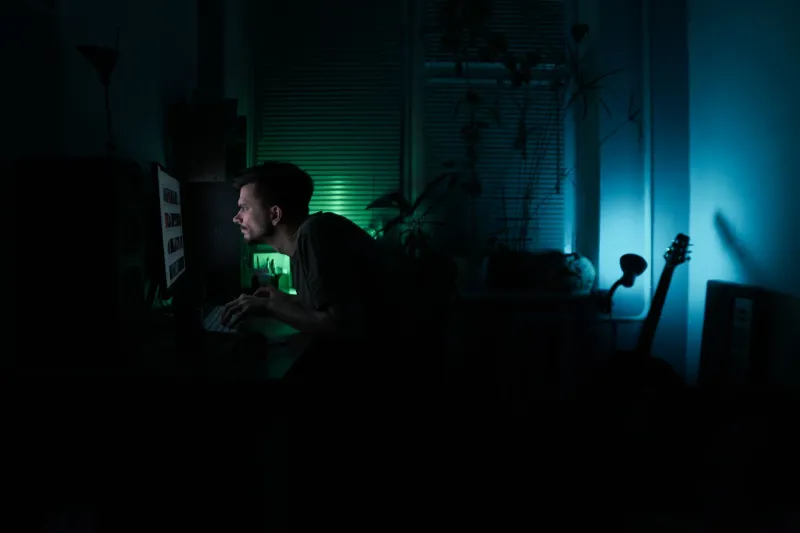
It's 2:17 AM on a Wednesday. A streamer — let's call him DungeonPrince_Actual — has just defeated the final boss of Legaia: Duel Saga, a PlayStation 2 RPG that approximately four Americans remember owning. The ending cutscene plays. It is eleven minutes long. It involves a lot of characters hugging in front of a sunset. DungeonPrince_Actual sits back in his chair, exhales like a man who has just defused a bomb, and types into his own chat: "we did it boys."
His chat responds with seven "PogChamp" emotes, two "F" keys, and a guy named xX_BlazeKing_Xx who types "gg" before immediately leaving the stream forever.
And then: silence. The void. The particular flavor of emptiness that only arrives when you have accomplished something real — something that required actual time, actual effort, actual emotional investment — and the universe responds with the enthusiasm of a DMV waiting room.
This is the hollow victory. And it is one of the most psychologically fascinating phenomena in all of streaming culture.
The Dopamine Math That Never Quite Adds Up
Here's what your brain promises you when you're forty hours into a game: finish this, and you will feel incredible. It's a contract written in serotonin. Every checkpoint, every level-up, every "saving progress" screen is a down payment on a reward that's just over the next horizon.
The problem is that the brain is a liar who has never once streamed to 47 people on a Tuesday.
Sports psychologists have a term for what happens to athletes after they win a championship — "post-achievement depression" — and it turns out the same neurological betrayal works at basically every scale, including "beat a mid-tier action RPG that your three regular viewers kept calling the wrong name for six weeks." You chase the thing. You get the thing. Your brain immediately starts asking what the next thing is, and in the meantime it gives you approximately four seconds of satisfaction before the lights go out.
For streamers, this is compounded by the audience problem. At least when you beat a game alone in your bedroom in 1998, you could lie to yourself about how impressive it was. When you do it on camera and the camera is pointed at thirty-nine real humans and eight bots, the math becomes unavoidable. The celebration is proportional to the crowd. And if the crowd is small enough, sometimes the celebration is just you, alone, typing into your own chat.
The Obscurity Multiplier
Not all hollow victories are created equal. There is a specific gradient of existential pain that scales directly with how weird the game is.
Beating Elden Ring to silence hurts, sure. But people at least know what Elden Ring is. They can nod. They can say "that's the hard one" and mean it. There's cultural context. There's a shared language.
Now imagine completing a 200-hour playthrough of Wizardry 8 — a PC RPG from 2001 that looks like it was rendered on a Casio calculator — while seventeen people watch. You have just invested the equivalent of an entire work month into a game that your viewers have been describing in chat as "the ugly one" for the past six weeks. The credits roll. Someone asks if you're going to play Skyrim next. You close OBS. You stare at your ceiling.
The obscurity multiplier is real, and it is vicious. The more niche the game, the more the accomplishment exists in a hermetically sealed bubble that only you can access. You are the only one who knows what it cost. You are the only one who remembers the dungeon that took four sessions to clear, the boss that wiped you eleven times, the lore you accidentally memorized because you were stuck in that one area for so long. Your audience watched some of it. They were there for the surface. You were there for all of it. And now it's over, and that private universe just collapsed, and DungeonPrince_Actual is sitting alone at 2:17 AM with a controller in his lap and nowhere left to go.
The Increasingly Unhinged Coping Mechanisms
Here's where it gets fun, because streamers — being streamers — do not simply sit with discomfort. They manufacture meaning with the desperate creativity of someone building a raft out of whatever's floating nearby.
Method one: the immediate pivot. Game ends, credits roll, streamer announces the next game before the music has even finished. No pause. No reflection. Just momentum, because if you keep moving fast enough you never have to feel the landing. This is the streaming equivalent of running directly from one relationship into another and calling it "healing."
Method two: the retrospective stream. Some streamers will actually schedule a separate stream to discuss the game they just finished. This is incredible. This is a person who beat a video game and then called a meeting about it. The meeting has an agenda. There are talking points. Nobody is required to attend but someone usually does, and for approximately ninety minutes the hollow victory gets retrofitted with artificial ceremony. It works, sort of, the way a participation trophy works: it doesn't mean the same thing, but it's warm and you can hold it.
Method three: the achievement screenshot dump. Post every unlocked achievement to Twitter/X with increasingly unhinged caption energy. "100% complete. I am free. I am nothing. I contain multitudes. Someone please acknowledge this."
Method four — the most unhinged and therefore the most beautiful — immediately starting a harder version of the same game. New Game Plus. Ironman mode. No-hit runs. The streamer, unable to tolerate the void, simply refuses to let the game end. They loop back around and make the mountain taller. This is not a coping mechanism. This is a lifestyle. This is a man who finished his Thanksgiving dinner and immediately ordered a second Thanksgiving dinner because he cannot be alone with himself for even thirty seconds.
Why It Still Matters, Though
Here's the thing that makes this whole phenomenon genuinely moving underneath all the absurdity: the accomplishment was real.
The 87 hours were real. The frustration was real. The satisfaction of cracking a puzzle that had blocked you for three sessions — that was real, even if only you remember it. The hollow victory is hollow specifically because the internal experience was full. It was dense with actual effort, actual emotion, actual time that cannot be refunded.
There is something quietly beautiful about a person who does a hard thing in front of a small audience and feels the loss of it when it ends. It means they actually cared. In a content landscape engineered to manufacture fake passion for maximum engagement, the hollow victory is one of the most honest things streaming produces — a real person finishing a real thing, sitting in the real silence afterward, and figuring out what to do with their hands.
DungeonPrince_Actual eventually started playing Legaia: Duel Saga again the following Friday.
He said it was for the new viewers.
We don't believe him. We believe he just wasn't done yet. And honestly? That's the most human thing we've heard all week.